Streaming TV advertising has become one of the fastest-growing segments of the advertising industry — but the terminology confuses almost everyone. Streaming TV ads, CTV ads, OTT ads: are they the same thing? How do the ads actually get delivered? And what does a campaign actually cost?
This guide answers all of it, in plain language, with 2026 pricing data.
What Are Streaming TV Ads?
Streaming TV ads are video commercials delivered over the internet to viewers watching television content on streaming platforms — services like Netflix, Hulu, Peacock, Prime Video, and free FAST channels like Tubi and Pluto TV.
Unlike traditional TV commercials (broadcast over airwaves or cable infrastructure), streaming TV ads are delivered digitally, one household at a time, through the same internet connection that carries the video content itself.
Quick facts for 2026:
- US connected TV ad spending is climbing toward $38 billion connected TV ad spending is climbing toward $38 billion in 2026
- Ad-supported tiers now account for roughly half of Disney+ subscribers and a third or more of Netflix’s base
- Even ad-free subscribers encounter ads on live sports and live TV streams
How Do Streaming TV Ads Work?
The delivery of a streaming TV ad involves five layers working together:
1. Streaming platforms — Netflix, Hulu, Peacock, Prime Video, and FAST services control the ad inventory. When a viewer on an ad-supported tier reaches an ad break, the platform makes the slot available for auction or fills it from direct deals.
2. Ad-supported content — Not all content carries ads. A show’s licensing terms determine whether commercials can be inserted. This is why ad loads vary: Hulu (With Ads) runs 8–10 minutes/hour, Netflix’s ad tier ~4–5 minutes/hour, and Max’s Ad-Lite as little as ~1.6–4 minutes/hour.
3. Video advertising formats — Pre-roll (before content), mid-roll (during breaks, typically 15–30 seconds), pause ads (when the viewer pauses), and branded content. Unlike cable, mid-roll streaming ads are generally non-skippable.
4. Audience targeting — This is streaming’s superpower. Platforms match ads to households using first-party viewing data, demographics, geography, and — with advertiser data onboarded — CRM lists and purchase behavior. A car dealership can target households whose lease expires within six months; a streaming service can target viewers of rival shows.
5. Advertising technology — Programmatic pipes (DSPs like The Trade Desk, Google’s DV360) let advertisers buy streaming inventory in real-time auctions, the same infrastructure used for web display ads — but with full-screen, TV-quality video. Self-serve platforms (Vibe, Adwave, tvScientific) have since opened CTV to businesses with budgets as small as $50.
Streaming TV Ads vs Traditional TV Ads
| Traditional TV Ads | Streaming TV Ads | |
|---|---|---|
| Delivery | Cable/Broadcast | Internet |
| Audience | Large, broad | More targeted audiences |
| Measurement | Limited (Nielsen estimates, days later) | Digital measurement (impressions, completion rate, conversions) |
| Viewing mode | Scheduled TV | On-demand + Live |
| Skip possible? | Only with DVR | No (non-skippable), but fewer total minutes |
| Ad load | 13–17 min/hour | 4–12 min/hour |
| Entry budget | Often $10,000+ | From $50 on self-serve platforms |
The structural difference: traditional TV sells audiences at scale to whoever is watching a given program; streaming TV sells specific households watching specific content. That is why measurement is the killer feature — advertisers finally know not just how many people saw an ad, but whether those households visited their website or made a purchase afterward.
What Is CTV Advertising?
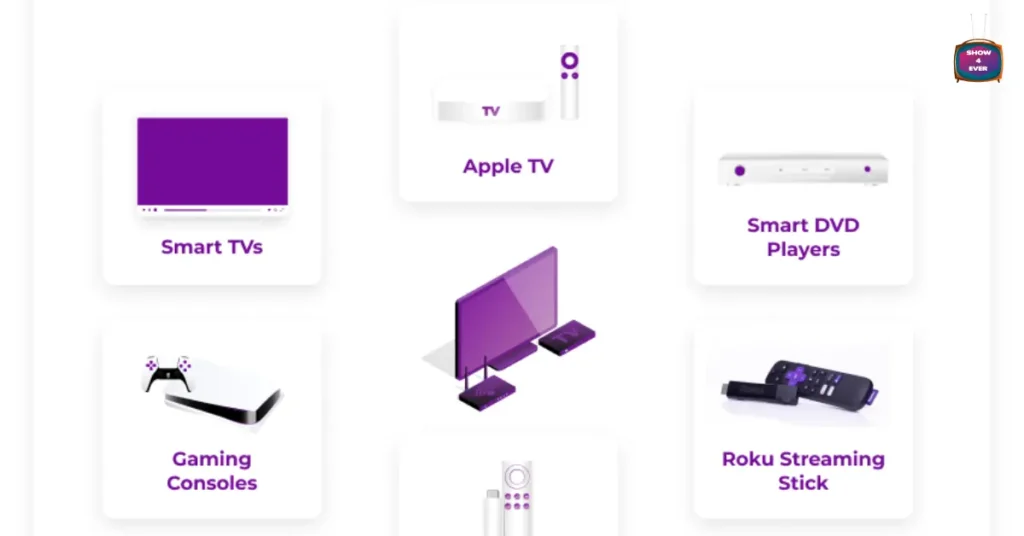
CTV advertising (Connected TV advertising) refers to ads shown on a television set connected to the internet — via a smart TV, Roku, Fire TV Stick, Apple TV, or game console.
CTV is a device category, not a content type. A commercial seen on a living-room TV while streaming The Bear on Hulu is CTV advertising. The same commercial watched on a phone in a waiting room is not — that’s mobile OTT.
CTV is the premium segment of streaming advertising: full-screen, lean-back, living-room viewing commands the highest CPMs (~$25–85) and the best brand-recall metrics in digital media.
What Is OTT Advertising?
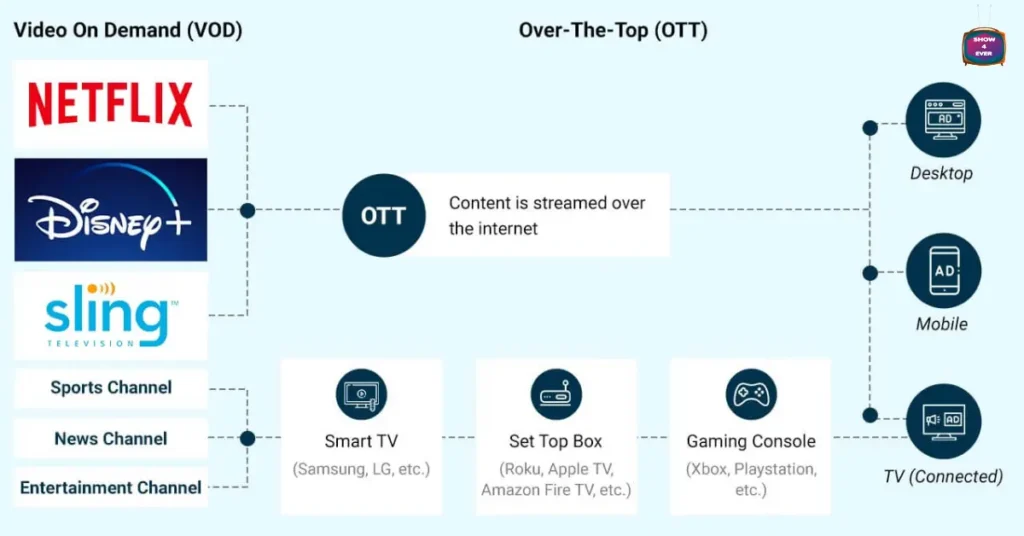
OTT advertising (Over-The-Top advertising) is the older, broader term: ads delivered “over the top” of traditional cable infrastructure — any video content streamed over the internet, regardless of device.
OTT covers everything: ads on a smart TV (CTV), on a laptop, on a phone, in a tablet app. CTV is a subset of OTT. In everyday industry usage, the terms have largely converged — but in contracts and analytics, the distinction still matters because CTV inventory prices and performs differently than mobile OTT.
CTV vs OTT vs Streaming TV Ads
| Term | What It Means | Scope |
|---|---|---|
| Streaming TV ads | Umbrella term — all TV-style ads delivered over the internet | Widest |
| OTT advertising | Ads on any internet-streamed video content, any device | Wide |
| CTV advertising | Ads on internet-connected television sets only | Narrow, premium |
Simple rule: all CTV is OTT, and all OTT is streaming TV advertising — but not vice versa. When a platform quotes you a CPM, ask whether it covers true CTV inventory or mixed OTT (including mobile); the value difference is significant.
Where Do Streaming TV Ads Appear?
Ads can appear before, during, or after movies, series, shows, and live events, depending on the platform and ad format:
- Pre-roll — before the content starts (common on FAST channels and some SVOD tiers)
- Mid-roll — inserted at natural breaks during content; the standard for ad-supported Netflix, Hulu, and Peacock tiers
- Post-roll — after content ends (rare, low engagement)
- Pause ads — static or video ads shown when the viewer pauses (Netflix, Hulu experiment actively with these)
- Live event ads — carried within sports and live broadcasts; these follow broadcaster schedules and can’t be removed even on ad-free plans
- Home-screen ads — branded tiles on the platform’s browsing interface (Prime Video, Roku)
Benefits of Streaming TV Advertising
Audience reach — Streaming reaches the households traditional TV is losing: cord-cutters and cord-nevers. US adults now spend more time with streaming than with cable and broadcast combined.
Targeting — Household-level precision: geography down to ZIP code, demographics, viewing behavior, and first-party CRM matching. No more paying for viewers outside your market.
Video engagement — Full-screen, sound-on, non-skippable completion rates of 90%+ — metrics banner ads can only dream of.
Measurement — Real-time dashboards: impressions, completion rates, website visits, and purchase attribution tied to actual households. TV advertising finally works like digital.
Brand awareness — The “big screen effect”: ads on living-room TVs generate brand recall rates far above mobile or desktop video, at CPMs far below traditional TV.
Ad-Supported Streaming Services
The ad inventory lives on these platforms (2026):
| Service | Type | Ad Load | Monthly Price (With Ads) |
|---|---|---|---|
| Netflix | SVOD | ~4–5 min/hr | ~$8 |
| Hulu | SVOD | ~8–10 min/hr | ~$10 |
| Disney+ | SVOD | ~4–5 min/hr | ~$10 |
| Peacock | SVOD | ~4.5–6 min/hr | ~$8 |
| Max | SVOD | ~1.6–4 min/hr | ~$10 |
| Prime Video | SVOD (ads default) | ~4–6 min/hr | Included with Prime |
| Tubi | FAST | ~8–12 min/hr | Free |
| Pluto TV | FAST | ~12 min/hr | Free |
| Roku Channel | FAST | ~8 min/hr | Free |
How Much Do Streaming TV Ads Cost?
Costs vary widely depending on the audience, platform, country, campaign duration, and advertising format. Current US benchmarks (2026):
| Inventory | CPM (cost per 1,000 impressions) |
|---|---|
| FAST services (Tubi, Pluto) | ~$15–25 |
| Open exchange programmatic | ~$15–30 |
| Premium direct (Hulu, Peacock, Netflix, Max) | ~$25–65 |
| Live sports streaming | ~$40–80+ |
| First-party data / CRM targeting | ~$35–85 |
Two pricing trends worth knowing: CPMs fell 10–30% through 2025 as supply flooded the market (every major streamer launched ads simultaneously), and live sports remains the stubborn premium — expect Super Bowl–adjacent streaming CPMs above $60.
👉 Want to launch your first campaign? [Compare self-serve streaming TV ad platforms and start advertising from $50]
The Future of Streaming TV Advertising
Three forces will define the next three years:
1. Ad loads are quietly creeping up. Platforms keep testing heavier commercial breaks — the same playbook cable ran in the 1990s. Netflix has already moved from its ~4-minute launch cap toward ~5 on some plans, and pause ads are becoming standard. The industry sweet spot will be found where viewers tolerate loads that remain below cable’s 13–17 minutes/hour.
2. Self-serve is democratizing TV. The $50 minimum budget marks the moment streaming TV advertising stopped being an enterprise-only channel. Local businesses — dentists, car dealers, restaurants — now run living-room TV campaigns with the same ease as Facebook ads.
3. Measurement is converging with outcomes. Attention metrics (did the viewer actually watch?), retail-media data (did the household buy?), and cross-screen attribution are replacing raw impressions as the currency. Advertisers will increasingly pay for verified attention, not delivered ads.
Frequently Asked Questions
What is the difference between CTV and OTT advertising?
CTV advertising runs only on internet-connected television sets; OTT covers all video streamed over the internet on any device. All CTV is OTT, but not all OTT is CTV.
How much do streaming TV ads cost?
US CPMs range from ~$15 on free ad-supported services to $60–85+ for premium and live sports inventory, with a market average around $26. Self-serve platforms accept budgets from $50.
Are streaming TV ads skippable?
Generally no — mid-roll ads on streaming platforms are non-skippable by design. That is precisely why completion rates exceed 90%.
Can small businesses advertise on streaming TV?
Yes. Self-serve CTV platforms (Vibe, Adwave, tvScientific and similar) let businesses launch targeted living-room TV campaigns from $50–500, with no agency required.
Which streaming services show ads?
Nearly all major platforms now offer ad-supported tiers: Netflix, Hulu, Disney+, Peacock, Max, and Prime Video (ads by default), plus entirely free FAST services like Tubi, Pluto TV, and the Roku Channel.
Do streaming ads work better than traditional TV ads?
For measurable outcomes, typically yes: targeting is household-level, completion rates are higher (non-skippable), and digital attribution ties ad exposure to website visits and purchases. Traditional TV still wins for sheer simultaneous reach during major live events.
Table of Contents
Share this content: