Streaming TV for business means delivering live television content over the internet to commercial venues — bars, restaurants, offices, hotels, gyms — using licensed business services rather than residential subscriptions. In 2026, commercial streaming packages start around $40–45 per month, replacing both traditional satellite dishes and (illegally used) consumer apps.
This guide explains how business streaming TV works, what it costs, and why the “residential plan at my bar” shortcut can end in a lawsuit.
What Is Streaming TV for Business?
Streaming TV for business is a commercially licensed television service delivered over the internet to public venues. Unlike residential streaming (your home Netflix or YouTube TV), business services include:
- Public-performance rights — the legal license to show content to your customers, built into the price
- Commercial terms of service — pricing and support designed for venues, not households
- Multi-screen management — control several TVs from one device
- Business-grade reliability — support SLAs and hardware options for commercial environments
In practice, it works exactly like consumer streaming — apps on smart TVs or streaming devices — but with the commercial licensing that keeps your business legal. DIRECTV states the boundary clearly: business-only streaming exists because residential streaming isn’t allowed for commercial use. DIRECTV offers a business-only streaming service; residential streaming isn’t allowed for commercial use.
How Does Business Streaming TV Work?
Six components work together:
1. Internet connection — the backbone. A business broadband line (cable or fiber, 100 Mbps+) carries every stream.
2. Smart TVs — modern commercial displays or consumer smart TVs with built-in apps.
3. Streaming devices — where TVs aren’t smart: Roku, Fire TV, or Apple TV sticks (~$30–50 each), or commercial-grade players for signage-style setups.
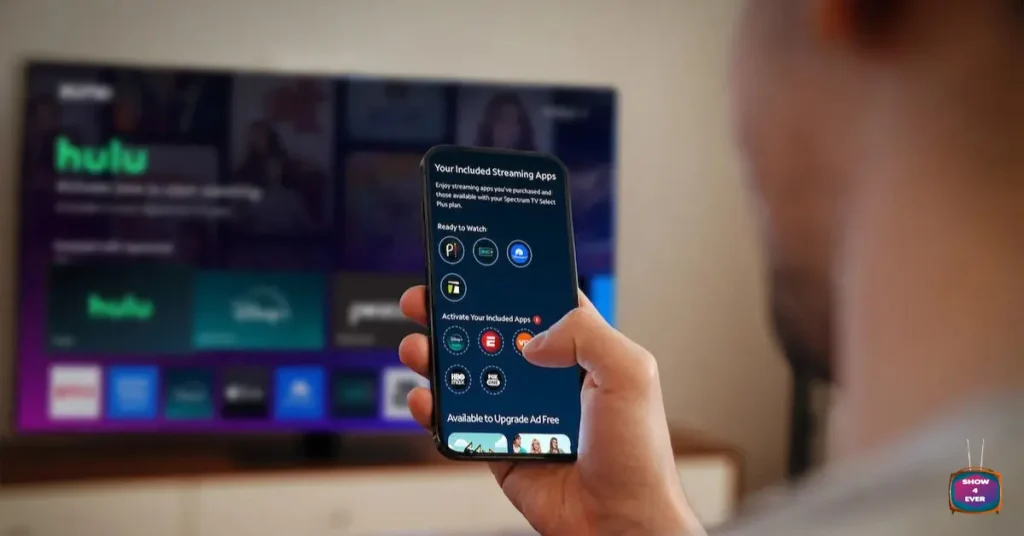
4. Business streaming platforms — the licensed apps: DIRECTV for Business streaming, Spectrum Business TV Stream, DISH Business apps. You log in once per device; channels stream live.
5. Multiple screens — each TV runs its own stream (roughly 10–15 Mbps per HD stream), or a central system distributes content.
6. Centralized control — professional solutions add a management layer: one tablet or dashboard to change channels across all screens, schedule content by time of day (morning news, afternoon sports, evening entertainment), and lock settings so staff can’t accidentally switch the big game off.
Why Businesses Are Moving to Streaming TV
The shift from satellite and cable to streaming in commercial venues is driven by practical advantages:
- Simplified installation — no dish on the roof, no coax cabling through walls. If the TV has internet, you’re live in minutes
- Less hardware — no receivers, no DVRs, no multi-switch boxes. Apps replace equipment
- Flexibility — move a TV anywhere with Wi-Fi; add a screen by plugging in a $40 streaming stick
- Multi-screen management — change all 8 bar TVs from one phone instead of hunting remotes
- Adapts to any environment — historic buildings where dishes are banned, rented spaces where landlords prohibit roof equipment, temporary pop-up venues
Professional solutions add centralized control, scheduling, and multi-screen management — features satellite never offered at this price point.
Streaming TV for Restaurants and Bars
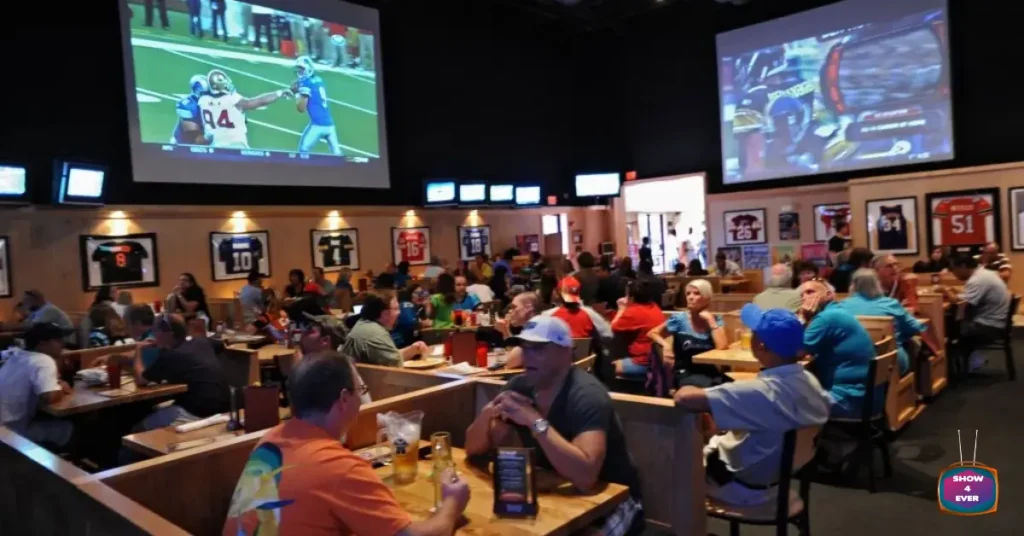
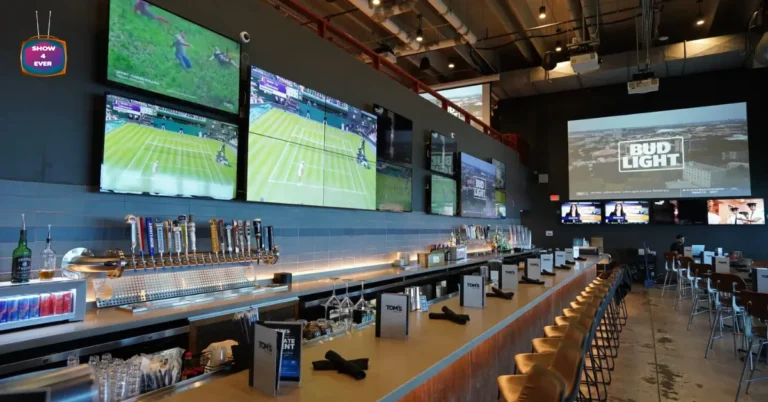
The flagship use case. For bars and restaurants, TV is revenue infrastructure — sports nights fill seats.
What matters here:
- Sports channel coverage — regional sports networks, ESPN, NFL/MLB/NBA packages
- Multi-TV economics — receiver fees multiply fast; streaming charges per screen or includes several
- Sound management — some venues pair TVs with audio zones (sound only on the game TV)
- Dayparting — news and business channels at lunch, sports in the evening
Budget: entry packages from ~$39.99–44.99/month (DIRECTV for Business streaming, 45+ channels). Pricing for DIRECTV FOR BUSINESS streaming starts at. 45+ channels. $. 39.99/mo; sports-focused tiers with regional networks run $85–200+/month. Thursday Night Football streams free on business channel 9550 for DIRECTV venues — a genuinely useful freebie.
Streaming TV for Offices and Waiting Rooms
Different job entirely: background content that reduces perceived wait time.
What matters here:
- News and light entertainment — no sports premium needed
- Commercial-free music — music channels bundled free with many business plans (valuable in medical offices where silence amplifies anxiety)
- Low maintenance — set it, lock it, forget it
- Single-screen pricing — most offices need 1–3 TVs; streaming avoids satellite’s receiver-fee stacking
Budget: $40–55/month covers 45–100+ channels; no-contract options (Spectrum Business TV Stream from $45/month with a 3-year price guarantee when bundled) suit office flexibility. Business TV Stream starts at $ 45 for 3 years when bundled with 2 or more services.
Streaming TV for Hotels
Hospitality has unique requirements:
- In-room streaming — guests log into their own apps on the hotel’s smart TVs (Netflix, Hulu) — separate from the hotel’s commercial TV license
- Lobby and common areas — commercial license required; hotel-grade systems manage dozens of screens centrally
- Welcome channels and signage — professional platforms mix TV content with hotel branding (“Welcome, conference guests” banners over live news)
- Occupancy-based licensing — some providers price by room count
Budget: per-room commercial streaming solutions typically bundle into hotel TV contracts; lobby setups follow standard multi-screen pricing.
Streaming TV for Gyms and Fitness Centers

Cardio rows of TVs are a gym staple:
- High screen counts — 10–20+ TVs on cardio equipment; per-screen economics are critical
- Centralized control — staff switch every treadmill TV to the same game with one action
- Branded content insertion — digital signage features overlay class schedules and promotions on screen
- Durability — commercial displays withstand 16-hour daily operation
Budget: entertainment-focused packages ($45–85/month base) plus commercial displays; app-based distribution avoids per-TV satellite receiver fees entirely.
Business Streaming TV vs Residential Streaming
The comparison every business owner should see before using a personal account:
| Residential Streaming | Business Streaming | |
|---|---|---|
| Usage | Personal | Commercial |
| Screens | Generally one household | Multiple screens supported |
| Options | Consumer products | Professional solutions |
| Management | Limited | Centralized control possible |
| Terms | Personal conditions | Business-adapted conditions |
| Legal | Private viewing only | Public-performance license included |
| Typical price | $15–73/month | ~$40–200/month |
The legal line: showing a residential stream to your customers is copyright infringement — content owners actively pursue venues, and statutory damages can reach tens of thousands of dollars. The price difference between residential and business plans is, quite literally, the cost of the license that keeps you legal.
What Internet Speed Does a Business Need?
The rule of thumb: 10–15 Mbps per simultaneous HD stream, plus headroom for your other operations (POS, guest Wi-Fi, security cameras).
DIRECTV FOR BUSINESS support recommends a minimum of 8 Mbps per device for its professional streaming service — but real needs scale with screens, video quality, and concurrent business traffic. DIRECTV FOR BUSINESS support indicated a minimum of 8 Mbps per device for its streaming.
Practical sizing:
| Venue | TVs Streaming HD | Minimum Broadband | Comfortable |
|---|---|---|---|
| Small café/salon | 1–2 | 50 Mbps | 100 Mbps |
| Office lobby | 1–3 | 75 Mbps | 200 Mbps |
| Restaurant/bar | 4–8 | 150 Mbps | 300–500 Mbps |
| Sports bar | 8–15+ | 300 Mbps | 500 Mbps–1 Gig |
Fiber or business cable preferred — latency and consistency matter more than raw speed for live TV.
How Much Does Streaming TV for Business Cost?
Pricing depends on six variables:
- Number of screens — per-screen fees or tiered multi-TV pricing
- Number of sites — multi-location businesses negotiate volume rates
- Content type — sports licensing is the biggest cost driver (a sports bar pays 2–4× a lobby’s rate)
- Commercial rights — included in business plans; this is what separates a $45 business from a $15 residential
- Installation — streaming: near-zero (DIY apps); satellite fallback: $0–200 dish install
- Additional services — music channels, signage features, extended warranties
2026 entry points: DIRECTV for Business streaming from ~$39.99/month (45+ channels), Spectrum Business TV Stream from $45/month bundled, DISH Business from $59.99/month, Sparklight Business TV from $53.25/month with no contract. Sports add-ons run $30–300+/season each.
👉 Pricing varies by venue type and location — [request a custom quote and compare commercial offers]
How to Choose a Business Streaming TV Service
Step 1 — Define the screens’ job. Sports revenue driver? Background ambience? Guest entertainment? The job determines the package.
Step 2 — Count screens honestly. Per-screen fees multiply; get multi-TV pricing in writing.
Step 3 — Verify your internet. Use the sizing table above; if broadband is weak, satellite (DISH Business) remains the fallback.
Step 4 — Compare contract terms. No-contract options (Spectrum, Sparklight) vs. 24-month terms with early termination fees up to $30/month remaining (DIRECTV, DISH). EARLY CANCELLATION FEE OF UP TO $30/MO. FOR EACH MONTH REMAINING.
Step 5 — Check the bundle math. Business internet + TV bundles typically save $10–20/month over separate services.
Step 6 — Confirm licensing in writing. Any provider should confirm the plan includes commercial public-performance rights — if they can’t, walk away.
Frequently Asked Questions
Is streaming TV legal to use in my business?
Only with a commercial subscription. Residential streaming plans are licensed for private home use; business plans include the required public-performance rights.
What is the cheapest streaming TV service for a business?
Entry commercial streaming packages start around $39.99–45/month (DIRECTV for Business, Spectrum Business TV Stream). Entertainment-only venues without sports needs pay the least.
How many TVs can I connect to a business streaming plan?
It varies by provider — some price per screen, others include multiple streams. Multi-TV venues should request specific multi-screen pricing before signing.
Does business streaming TV include sports channels?
Yes, but sports tiers cost more. Regional sports networks and league packages (NFL Sunday Ticket, MLB Extra Innings) are add-ons ranging from ~$30/month to several hundred per season.
What internet speed do I need for business streaming TV?
Plan for 8–15 Mbps per TV streaming in HD. A 5-TV restaurant needs at least 150 Mbps broadband, with headroom for other business traffic.
Can I cancel business streaming TV anytime?
No-contract options exist (Spectrum Business, Sparklight), but DIRECTV and DISH business plans typically require 24-month agreements with early termination fees up to $30 per remaining month.
Table of Contents
Share this content: