Is Streaming TV Better Than Cable? The Real-Time 2026 Guide Everyone’s Talking About
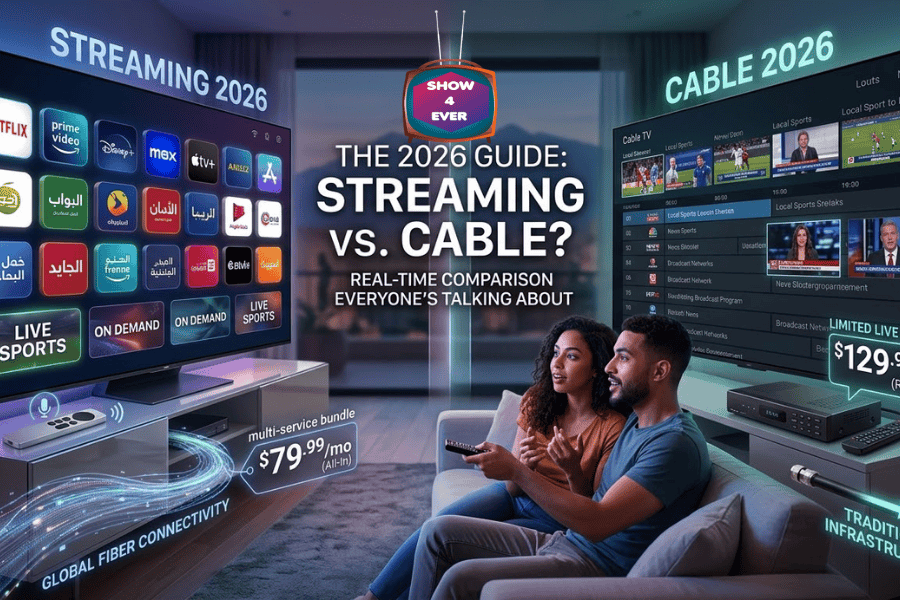
The question “Is streaming TV better than cable?” has progressed beyond just a casual debate to an actual decision that people make in their homes. In 2026, people are not just deciding how to watch TV. They are choosing how much to spend, how much flexibility they want, how they follow sports and news, and how they want entertainment to be part of daily life. That is precisely why this topic is so important at this time.
The most recent viewing data demonstrates just how dramatic the shift has become. Nielsen said streaming surpassed the combined share of broadcast and cable as the biggest source of TV use in May 202,5 with a 44.8 percent share. Then, in December 2025, streaming broke another record by hitting 47.5% of TV viewing – with enormous spikes driven by events such as NFL games on Netflix and Prime Video. At the same time, Pew Research found that 83% of adults in the US use streaming services, while only 36% currently subscribe to cable or satellite TV at home. That in itself tells you that the old TV model is no longer the default for most people.
But the answer is not as simple as saying that streaming wins in every case. The modern viewer has more choices than ever before, but that freedom comes at a cost. Deloitte’s 2025 Digital Media Trends report found that rising subscription costs are putting real pressure on the media, and 39% of consumers said they had canceled at least one paid streaming service in the last six months. So while streaming often looks cheaper and more flexible on the surface, the total cost can creep up fast when people stack multiple services together.
That is why this guide is taking a 2026 real-time approach. Instead of repeating old talking points, this article takes a look at what actually is happening now: where audiences are going, how much the leading services cost, how live sports and breaking news are making changes, and what kind of setup makes the most sense for different households. If you have been asking the question “Is streaming TV better than cable?”, now is the time to examine the entire picture with new eyes.
Is Streaming TV Better Than Cable? Why 2026 Is Changing Everything Fast
If you want the quickest answer to the question “Is streaming TV better than cable?”, 2026 is making that answer more favorable to streaming than ever before. The reason is not only that streaming is popular. It is that the whole of TV ecosystem is reorganizing itself around it. Viewers, platforms, advertisers, sports leagues, and media companies are all pushing in the same direction. That kind of momentum is important since it changes what consumers can expect from the market in the future.
Nielsen’s data from the recent past captures the shift well. In May 2025, streaming surpassed both broadcast and cable, with 44.8% of all TV viewing. By December 2025, streaming had risen to 47.5%, which was the highest share Nielsen had ever recorded. That is not a small change. It’s a signal that streaming is no longer an alternative to cable. It is becoming the focal point of the TV experience for a huge percentage of viewers.
What makes this even more exciting is the speed at which the change is occurring. Nielsen said the usage of streaming has increased 71% since 2021, whereas the use of cable viewing has fallen by a significant amount over the same period. That means this is not a slow theoretical transition. It is an enormous real-life movement occurring in just a few years. And in December 2025, streaming’s big moment was powered not only by on-demand shows, but by major live events too, including NFL games carried on Netflix and Prime Video. That is significant because live events were once one of cable’s biggest strengths.
Consumer behavior is changing at an equally rapid pace. Pew Research found that 83% of US adults use streaming services compared to 36% who subscribe to cable or satellite TV at home. Even more telling, 55% say that they watch streaming without having cable or satellite. In other words, for a lot of households, cable is not being supplemented. It is being replaced. Younger adults are particularly advanced in that transition, but the trend is general enough that it now affects just about every age and income group.
So why does 2026 feel different from the past? Because the old boundaries are falling apart. Streaming used to mean binge-watching series while cable meant live channels and sports. That distinction is much weaker now. Streaming platforms are now providing original programming, ad-supported levels, live channels, sports packages, free FAST channels, cloud DVR capabilities, and bundled subscriptions. Meanwhile, cable companies themselves are increasingly trying to look more like streaming aggregators by putting apps and streaming bundles into their own devices and packages. Xfinity, for instance, is now marketing app bundles and integrated streaming features in tandem with its TV offerings, which is indicative of the change affecting even traditional providers in adapting to the streaming-first market.
That is why the question “Is streaming TV better than cable” in 2026 is really a question about which model is more adapted to modern life. For many people, the answer is streaming because it is the way they live already: multiple devices, personalized recommendations, on-demand access, easier cancellation, and fewer long-term commitments. But it is also true that 2026 is exposing new weaknesses in streaming, particularly in the areas of cost inflation, fragmentation,n and decision fatigue. Viewers have more freedom, but they also have more to deal with.
Still, the direction of travel is evident. Media companies are following audiences, and audiences are spending more and more of their time in streaming environments. When streaming begins to break records not only with shows but with the biggest live moments on television, it becomes more difficult to argue that cable is still the future. Cable has its place, particularly on the household side, but 2026 is the year when streaming no longer looks like the challenger but is starting to look like the standard.
Is Streaming TV Better Than Cable for Real-Time Saving?
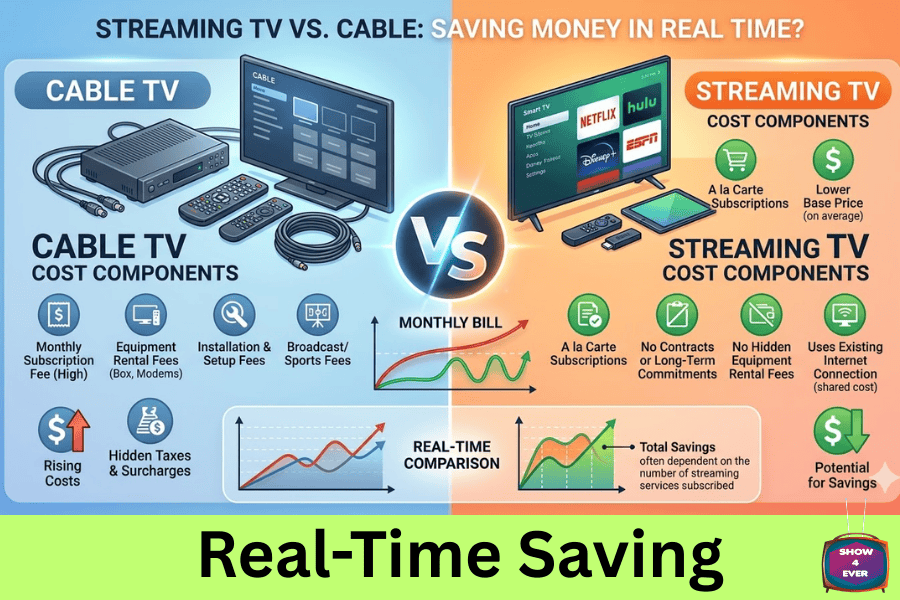
One of the biggest reasons why people ask “Is streaming TV better than cable?” is simple: money. Most households are not making this decision as media analysts. They are making it as people watch monthly bills pile up. In that sense, streaming often gets a head start. It typically feels cheaper, easier to control, and not as bound to long contracts. But the answer to this in 2026 in real-time is a bit more complicated than that.
Let’s begin with the good news of streaming. A person who wants only a few services can often spend much less than a traditional cable customer. Some streaming options are still relatively affordable, and there are also some free ad-supported options in the market. Nielsen pointed out that FAST services like Pluto TV, Roku Channel, and Tubi grew to 5.7% of TV viewing in May 2025, demonstrating that free streaming is a meaningful part of the way people watch. That gives budget-conscious households options that cable never really provided at the same scale.
Streaming also gives the consumer the power to scale up or down. You can subscribe for a month, cancel, switch, or rotate services based on what you want to watch. That level of control is one of the strongest arguments as to why streaming TV can be better than cable. You are not always stuck paying for hundreds of channels you never watch. Instead, you can make a smaller entertainment stack based on your real habits.
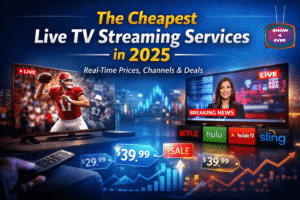
But here is the reality check: the savings are not automatic anymore. Some of the largest live TV streaming services are now real money. YouTube TV currently lists its standard subscription price at $82.99 a month, while Hulu + Live TV lists at $89.99 a month for its ad-supported live plan bundle. Sling is still the cheaper option, depending on the plan, with pricing pages revealing entry levels around the mid-$40 range, but add extras, premium channels, sports packages, or multiple standalone services,s and many can find the bill skyrocketing faster than they might have anticipated.
That is where cable starts to fight back. Traditional cable tends to get trashed for hidden fees and inflexibility, and that isn’t coming out of the blue. Yet in 2026, the difference between cable and premium live streaming bundles is not as vast as many people think. Xfinity’s current offers illustrate how TV pricing can still be packaged with internet and other products, while third-party summaries of current Xfinity plans put entry TV packages starting around $55 per month and bigger channel packages much higher based upon location and bundle conditions. In reality, some households may find that the cost of a full streaming stack plus broadband internet is almost the same as a cable bundle.
This is precisely why Deloitte’s research is so important. The firm did find that 39% of consumers had canceled at least one paid SVOD service in the past six months, and it attributed that churn, in part, to cost pressure. Deloitte also found that there is limited consumer tolerance for price increases, with many consumers saying they would cancel if prices were to increase every month. In other words, the market itself is telling us that streaming’s low-cost image is under pressure.
So, is streaming TV better than cable to save money in the present? Usually, yes, but only if you are intentional. Streaming stands out as the winner in most cases, for light-to-moderate viewers who want the flexibility to choose, don’t need all the sports packages,s and are willing to rotate subscriptions. It can also be better for households that combine one or two paid apps with free streaming services. But if you want prime live TV, big sports, lots of add-ons, no ads, and every big platform at the same time, streaming can get expensive enough that cable no longer looks wildly overpriced by comparison.
The smartest takeaway from 2026 is that streaming can often be cheaper because it allows you to have control, but not because every streaming combination is low-cost. That distinction matters. If you use streaming the way many consumers think of it at first, with discipline and customization, it can absolutely beat cable on price. If you use it like cable plus extras plus sports plus multiple premium subscriptions, then it may still be better in flexibility, but not always in monthly savings.
Is Streaming TV Better Than Cable For Live Sports, Breaking News, and Must-See Events?
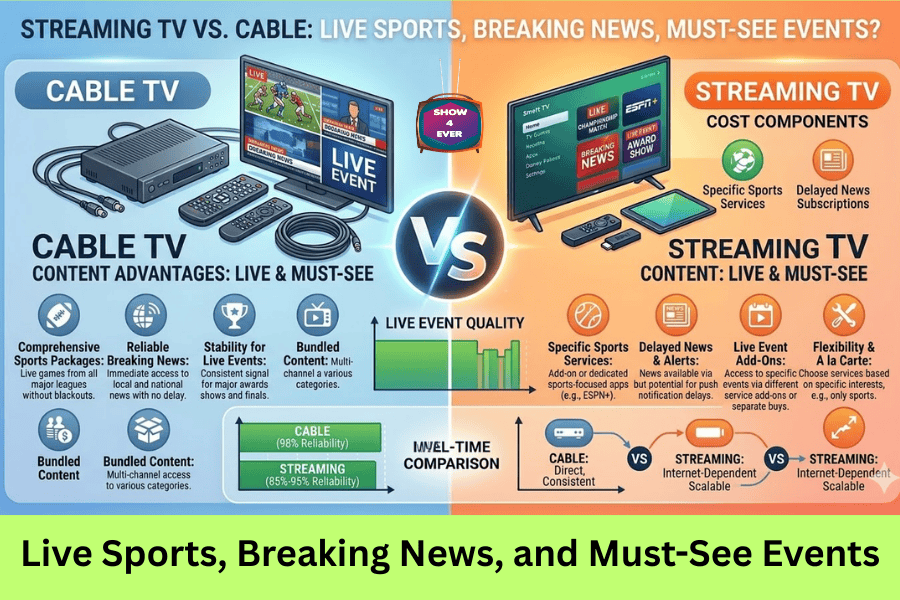
For years, the best case against cord-cutting was this: Cable was where live television is still safest. If you cared about sports, or election coverage, or award shows, or breaking news, cable seemed more dependable and more complete. That is why this section is so important. If the answer to “Is streaming TV better than cable?” has changed anywhere most dramatically, maybe here.
The latest evidence indicates that streaming is no longer solely for library content and originals. It is becoming a major home of live events. Nielsen’s January 2026 report featured a historic Christmas Day in which streaming reached 55.1 billion viewing minutes, driven by NFL games on Netflix and Prime Video, and helped boost streaming to 47.5% of all TV viewing in December 2025. That is a stunning signal. The type of event programming that used to be used to defend cable is now also powering streaming’s biggest wins.
YouTube TV is a great example of how streaming is now playing hard in the live-TV arena. Its official pages promote live sports, shows, and news, and also position NFL Sunday Ticket as an add-on destination for football fans. Hulu + Live TV does something similar, promoting 95+ live TV channels and access to Disney+, Hulu, and ESPN Select content. Sling, meanwhile, leans hard toward being a lower-cost way to stream live sports, news, and entertainment. These are not niche offerings. They are direct attempts to replace the traditional cable experience.
Still, this does not mean that streaming has completely eliminated cable’s strengths. Live sports on streaming can be subject to blackout restrictions, shifting rights arrangements, additional costs, or the need to subscribe to more than one service. A household that desires all the big games, across all the leagues, could end up juggling multiple apps and paying more. With cable, the experience can still be simpler for viewers who want a single channel guide, a single remote habit, and less concern about where the next event is.
Breaking news is another area where there is still some psychological advantage for cable, particularly for older viewers or those who enjoy leaving live channels on in the background. But even here, streaming is bringing the gap closer. Not only have live streaming TV services adopted major news networks, but live streaming television services are now available in many markets for access to local TV stations, and for mobile viewing that cable cannot easily support. For many users, being able to watch live news on phones, tablets, smart TVs, and laptops makes streaming seem more useful in the real world, particularly for fast-moving events.
Pew’s numbers back the overall change in behavior. Only 36% of Americans say they currently subscribe to cable or satellite at home, while the use of streaming is much more widespread. That means millions of people are already choosing streaming in spite of the traditional argument that cable is still better for live content. In practical terms, consumers seem to be deciding that the live capabilities of streaming are now “good enough” or even excellent for their needs.
There is also a symbolic point here. When major platforms are carrying NFL games and driving record-setting viewing days, they stop looking like side options. They begin to look like primary television platforms. That alters the expectations of both the viewers and the rights holders. Sports leagues want reach, media companies want attention, and streaming platforms want must-watch moments that keep subscribers in. All three incentives point towards even more live-event investment in streaming ahead.
So, is streaming TV better than cable when it comes to live sports, breaking news,s and must-see events? In 2026, the answer is becoming increasingly yes for many viewers, but not in every situation. Streaming is now powerful enough that it can absolutely be used as a primary live TV solution. But the simplest best answer depends on how broad your needs are for live content. If maximum simplicity and a traditional all-in-one feel are what you seek, cable still argues. If you are looking for mobility, modern features, and increased access to big live moments, streaming is proving that it is at the center of the conversation.
Is Streaming TV Better Than Cable in Terms of Flexibility, Customization, and Everyday Convenience?
If cost starts the conversation, convenience often ends it. For many households, the biggest reason why streaming seems to be better than cable is not just savings. It is control. That is where the question “Is streaming TV better than cable?” becomes deeply personal. It is dependent on how people live day to day, and modern life tends to favor flexible systems over rigid systems.
The concept of streaming is based on viewer choice. You can watch on a smart TV in the living room, pick up in the kitchen on a phone,e and finish on a laptop while traveling. That type of device freedom has become normal and is one of the biggest reasons why streaming is more natural to so many people. Traditional cable still works best where the household is based around a fixed television setup. Streaming is better when the entertainment needs to move with the user.
This is also why personalization is so important. Streaming platforms are designed to learn what their viewers like, surface recommendations, create profiles, separate children’s content, and make on-demand libraries easy to search. Cable may still offer a broad channel experience,e but it is rarely as tailored. In 2026, it is not a luxury to customize. It is part of what consumers expect.
Deloitte’s research leads one to an interesting twist here. The company discovered that many consumers want content to be easier to find across services and that difficulty finding something to watch could actually lead to cancellations. It also noted that around three-quarters of surveyed Gen Z and millennial users would like to be able to search across all the services that they access. That demonstrates the strength and weakness of streaming convenience. It is incredibly flexible, and it can also become fragmented.
That fragmentation is the reason why bundles and aggregation are becoming a bigger deal. Deloitte reported that streaming bundles can reduce churn,n and its cited industry analysis found that subscribers to a Disney+, Hulu, and ESPN+ bundle were 59% less likely to churn than those who only subscribe to Disney+ alone. Meanwhi, the providers such as Xfinity are now promoting app bundles and integrated devices, sort of borrowing from the streaming playbook to make discovery easier. Streaming is winning, but even streaming now requires simplification layers built on top of it.
Even with that challenge, the convenience of everyday life still tends to be on the side of streaming. There is no need to plan your life around a fixed airing time when on-demand access is available. Cloud DVR, restart features, downloadable content on some services, multi-device support – these give the viewer a level of control cable traditionally struggled to match. If someone asks, “Is streaming TV better than cable for busy families, students, or people constantly on the move?”, the answer is usually yes.
Pew’s findings make clear that this model is already mainstream. The fact that 83% of adults use services such as streaming services indicates that these habits are no longer unique or tech-only. Streaming is now common throughout the population, and majorities in many age groups are streaming. The appeal is not only content. It is the way streaming suits modern schedules and preferences.
Of course, cable still has some convenience strengths of its own. Some people truly prefer to turn on the TV and flip through the channels without making decisions. Others, such as the familiarity of a single bill, a single guide, and a more passive manner of viewing. For such users, streaming’s endless menus can be less convenient, not more. Too much choice can be friction.
That said, 2026 is a time when the convenience debate is majoring in favor of streaming. The market is doing its best to reduce fragmentation through bundles, better interfaces and app ecosystems. And for the average viewer who values control, mobility, and tailored viewing, streaming still feels more like everyday life. The best argument for cable now is usually simplicity via habit. The best argument for streaming is flexibility by design. For most modern households, design is winning.
Is Streaming TV Better Than Cable for Modern Households Looking Ahead in 2026?
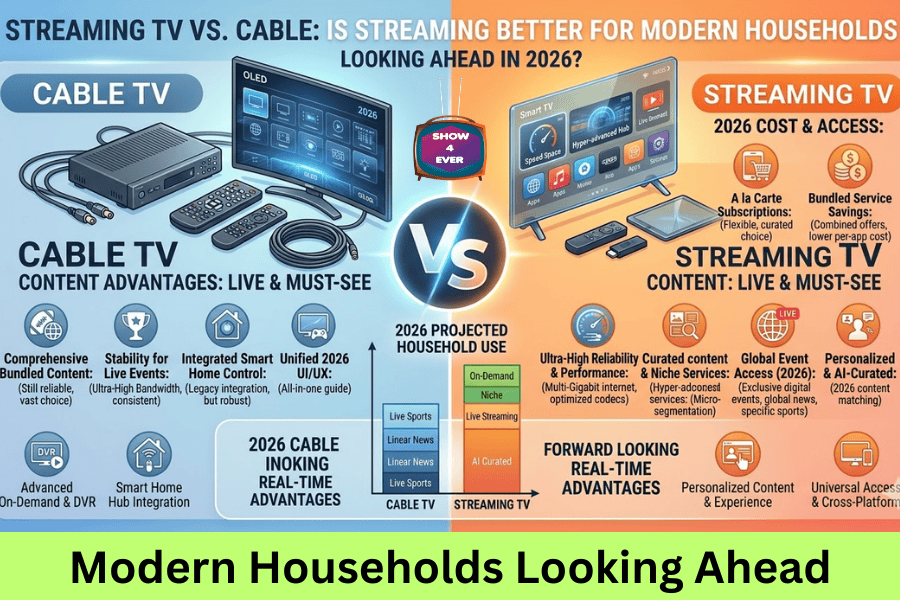
When families ask, “Is streaming TV better than cable?”, they’re often really asking something more: what setup makes the most sense for the way we live now, and for where TV is going next? That is the right question to end on, because the best answer in 2026 is not just about today’s bill or today’s content. It is about long-term fit.
Modern households do not all look alike. A student apartment, a young couple, a family with children, a sports-obsessed household, and an older couple who watch the local news every evening may all require something different. That is why the streaming vs. cable debate must be based on lifestyle and not ideology. Streaming is not necessarily better in every single case. But it is increasingly better for the way a lot of people organize time, money, and entertainment.
The first reason is where the audience is going. Nielsen’s data shows streaming isn’t reaching the ceiling at the margins. It is becoming the dominant environment for TV usage. By December 2025, streaming accounted for 47.5% of television viewing, and in May of 2025, it overtook broadcast and cable combined. That is important to households who may be planning ahead, since the content, ad models, sports rights, and the design of products tend to follow the attention of the audience. Families opting for streaming are trending less with the center of gravity, but are moving with it.
The second reason is demographic reality. Pew found that 55% of Americans watch streaming, but don’t subscribe to cable or satellite, while only 28% of Americans both subscribe to cable/satellite and watch streaming. That means that the streaming-only or streaming-first household is already a major part of the market. Younger viewers are even more heavily skewed in that direction, which suggests that the long-term trend is still away from cable dependence.
The third reason is flexibility. Modern households often need a TV to work from room to room, device to device, schedule to schedule, and budget to budget. Streaming enables families to start small, add services for a season, cancel when priorities shift,t and customize access to specific needs. That is especially useful in a time of economic pressure, when people are interested in feeling in charge of their monthly commitments. Cable can still have its appeal with households that wish to have a stable and familiar setup, but streaming suits change better.
Still, there are some smart reasons why some modern households have cable or opt for a hybrid approach. Older viewers may appreciate ease and habit. Heavy live-sports viewers may prefer the simplicity of traditional channel access. Some homes might derive significant value from cable bundles if the internet, local channels, and TV are packaged efficiently. In these cases, the answer to “Is streaming TV better than cable?” may be “mostly yes, but not by enough to make everything change overnight.”
That is where the hybrid model deserves attention. Many households now combine broadband internet, one live-TV streaming option or cable replacement, and one or two on-demand services. This approach takes into account the reality of 2026: consumers need not be loyal to just one model. They can construct a viewing system. Media companies understand that,t too, which is why bundles, app integration, and device ecosystems are becoming more important.
Looking to the future, the greatest advantage streaming has is momentum. It is gaining audience share, more live programming, more free options, and is evolving at a rapid pace. Cable still has its loyal users and practical strengths, but it is increasingly feeling like the format is adapting to the future rather than the future itself. For modern households that think a year or two into the future, however, that distinction is important.
So for households who are planning in 2026, streaming generally makes the best long-term case when the priority is flexibility, personalization, and control. Cable still has its place, however, for viewers who appreciate simplicity and familiar live-TV structure. But if the question is which model looks more aligned with the future of home entertainment, the answer is streaming by a clear margin.
Conclusion
So, is streaming TV better than cable? In 2026, the most honest answer is that streaming is better for most people, but not every style of viewing. It is winning on momentum, audience behavior, flexibility,y and increasingly even on live-event relevance. Nielsen’s recent reports show streaming setting historic records and taking over traditional television in key measurement periods, while Pew’s research shows far more Americans using streaming than subscribing to cable or satellite.
At the same time, the modern streaming world is not perfect. Costs can add up, services are fragmented, and premium live-TV packages can get expensive fast. Deloitte’s research makes it clear that churn and price sensitivity are now core parts of the streaming story. That means that the best way to approach 2026 is not just to throw out cable without a thought. It is to construct the setup that corresponds to the actual habits of your household.
For many people,e that will mean a streaming first approach with a few carefully chosen services. For others, it may be a hybrid setup. But the bigger trend is difficult to ignore: streaming is no longer the future of television. It is the present. And that is precisely why so many people keep asking, more urgently than ever, “Is streaming TV better than cable?”
I can also make this into a cleaner SEO blog version with shorter paragraphs, a meta description, FAQ schema style questions, and internal link suggestions.
Table of Contents
Share this content:



Post Comment